
Current of Change
- Nov 21, 2025
- 7 min read
Background
Prof. Kishore Chatterjee is a senior faculty member in the Department of Electrical Engineering at IIT Bombay. His research interest lies in power electronics for efficient and grid-friendly energy conversion and integration, particularly in renewable and utility-scale systems. At IIT Bombay, he teaches a range of core and advanced courses, including Power Electronics, Electrical Machines, and Electric Drives.
In his first-year course, EE103: Introduction to Electrical Engineering, Prof. Chatterjee often handles large cohorts exceeding 200 students, making it challenging to maintain engagement, monitor attendance, and ensure fair and efficient assessments.
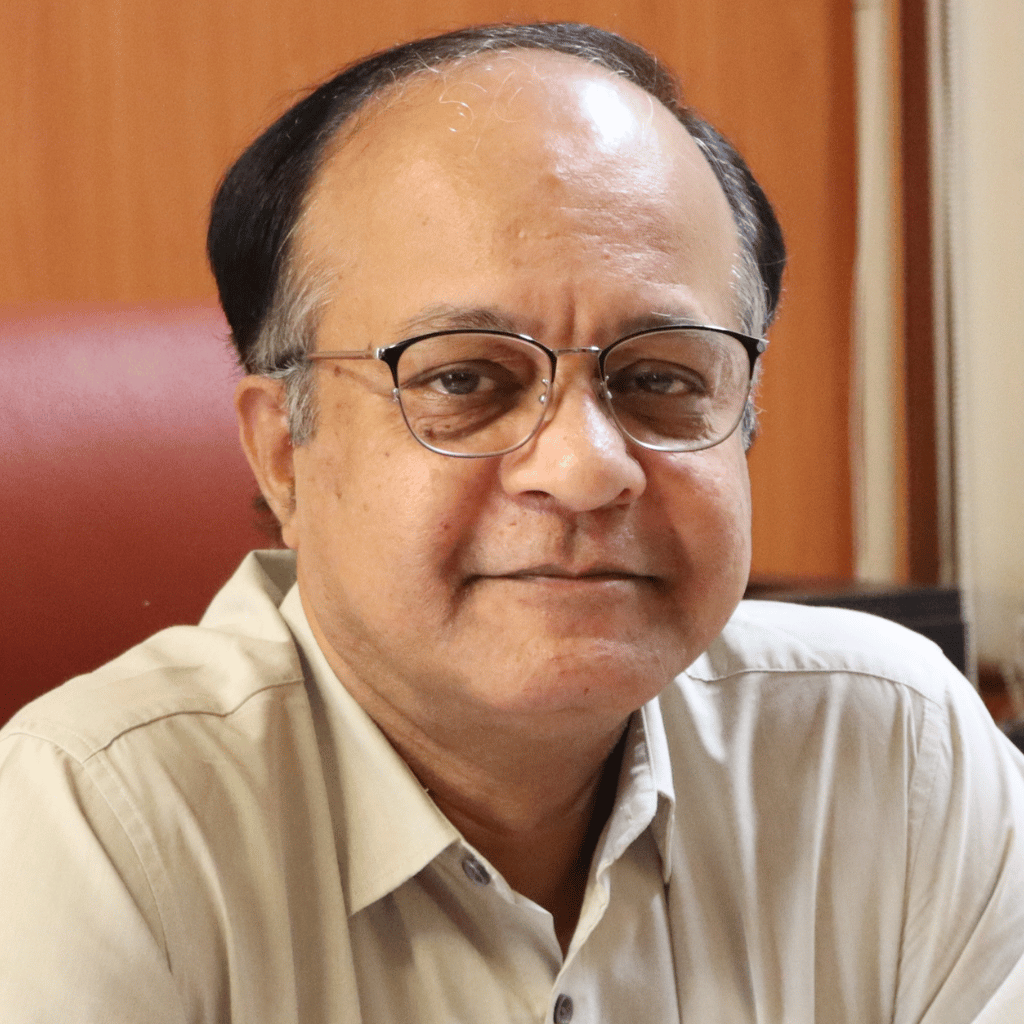
Kishore Chatterjee
Professor, Electrical Engineering, IIT Bombay
Challenges
“By the time I finished marking who was present and who wasn’t, I had already lost five to ten minutes of teaching time,” he recalls. Yet, the bigger task was sustaining engagement, the initial curiosity that brightened the first few weeks often faded as the course grew heavier.Rather than turning to paper or manual systems, Prof. Chatterjee decided early on to bring structure and simplicity to the process through SAFE. The platform became his way to address two persistent concerns, participation and engagement, without letting administrative work eat into teaching time.
Solution
“All I needed to do was upload the class schedule on my dashboard,” said Prof. Chatterjee. “Attendance became a single-tap action. Accurate. Quick. Reliable.”To ensure that students stayed attentive till the last minute, Prof. Chatterjee began conducting a short five-minute quiz at the end of every lecture.
“So what I started right on day one,” he explained, “is a quiz in the last five minutes, based only on what was taught that day. It’s a technical recall, multiple choice, jumbled both in questions and options.”These end-of-class quizzes became a signature part of his teaching routine. Students participated through SAFE, allowing real-time response collection. The habit of daily recall helped sustain engagement and created a rhythm of continuous learning. For longer, written quizzes, SAFE played an equally crucial role. Instead of distributing question papers physically, only the response sheets were handed out to save paper. Students wrote their answers, scanned the sheets using their phones, and uploaded them to SAFE before leaving the classroom.
“That gave us two copies,” Prof. Chatterjee noted. “A physical one and a digital record. TAs could evaluate whichever was convenient. No papers lost, no confusion.”By retaining both the handwritten and digital versions, the process ensured authenticity and made post-evaluation reviews significantly easier. Earlier, regrading or “crib” sessions meant chaos. With SAFE, these interactions became entirely digital. Students could raise regrading requests question by question, and instructors could respond within the same interface.
“There were no physical crib sessions anymore,” said Prof. Chatterjee. “Everything was online, and it worked beautifully.”During the conversation, Prof. Chatterjee was also introduced to the latest enhancements in SAFE’s “interactions” module. A chat-like interface with customisable color-coded flags (green for accepted, red for rejected, yellow for pending) designed to make communication even clearer and more structured. He appreciated how such a system could further improve transparency and make the review process faster and more intuitive. He also learned about SAFE capabilities for administering quizzes, Scheduled Start and Flexible Start modes. The Scheduled Start option allows instructors to predefine quiz timing and securely share the decryption password with students at the chosen moment, while Flexible Start offers freedom to begin the quiz anytime based on class flow. Both, he noted, could simplify management for large cohorts while maintaining exam integrity.
Educators' Reflections
Students responded positively to the format. The five-minute quizzes, in particular, were seen as both challenging and rewarding, providing immediate reinforcement of concepts taught that day. Teaching assistants, too, appreciated the simplicity of the digital workflow, grading and complaint/crib resolution on SAFE felt far more structured than the scattered email threads or paper-based reviews of the past.
Large-scale deployment, however, brought a few practical lessons. During institute-wide examination windows, server loads occasionally caused brief upload delays, especially on Android devices. In some classrooms, network instability led to intermittent quiz download issues. To address these connectivity-dependent challenges, SAFE’s Scheduled Start and Flexible Start quiz options were suggested. By allowing instructors to either pre-schedule a quiz with encrypted access or launch it flexibly based on class flow, these features offered a practical way to ensure smooth participation even in low-connectivity situations. Situations like these underscore the robustness of SAFE’s design, built to anticipate edge cases and keep academic workflows uninterrupted even under pressure.
Key Takeaway
By integrating SAFE into his classroom, Prof. Kishore Chatterjee redefined the dynamics of large-class teaching at IIT Bombay. What began as a solution for managing attendance and daily quizzes evolved into a unified digital workflow for evaluation and feedback. SAFE empowered him to sustain engagement through real-time assessments, ensure consistency in grading and crib resolution, and significantly reduce the administrative burden for both faculty and TAs.
Create your next secure exam with the same
ease as you refresh a tab