Calculating Clarity
- Nov 01, 2025
- 7 min read
Background
Prof. Baskar S, from the Department of Mathematics at IIT Bombay, teaches courses with class sizes ranging from 50 to over 350 students. His evaluation pattern is designed to promote continuous learning and active engagement. Over a typical semester, he conducts around 30 class tests conducted at random times during the lecture hours, of which the best 20 scores are counted towards the final grade. In addition to these, there are two quizzes, a mid-semester and an end-semester examination. The class tests are typically short, lasting two to four minutes, and are meant to keep students attentive while reinforcing key concepts in real time.
While this continuous assessment model encourages learning, managing it for large batches requires a high level of coordination between the instructor, Teaching Assistants (TAs), and students.
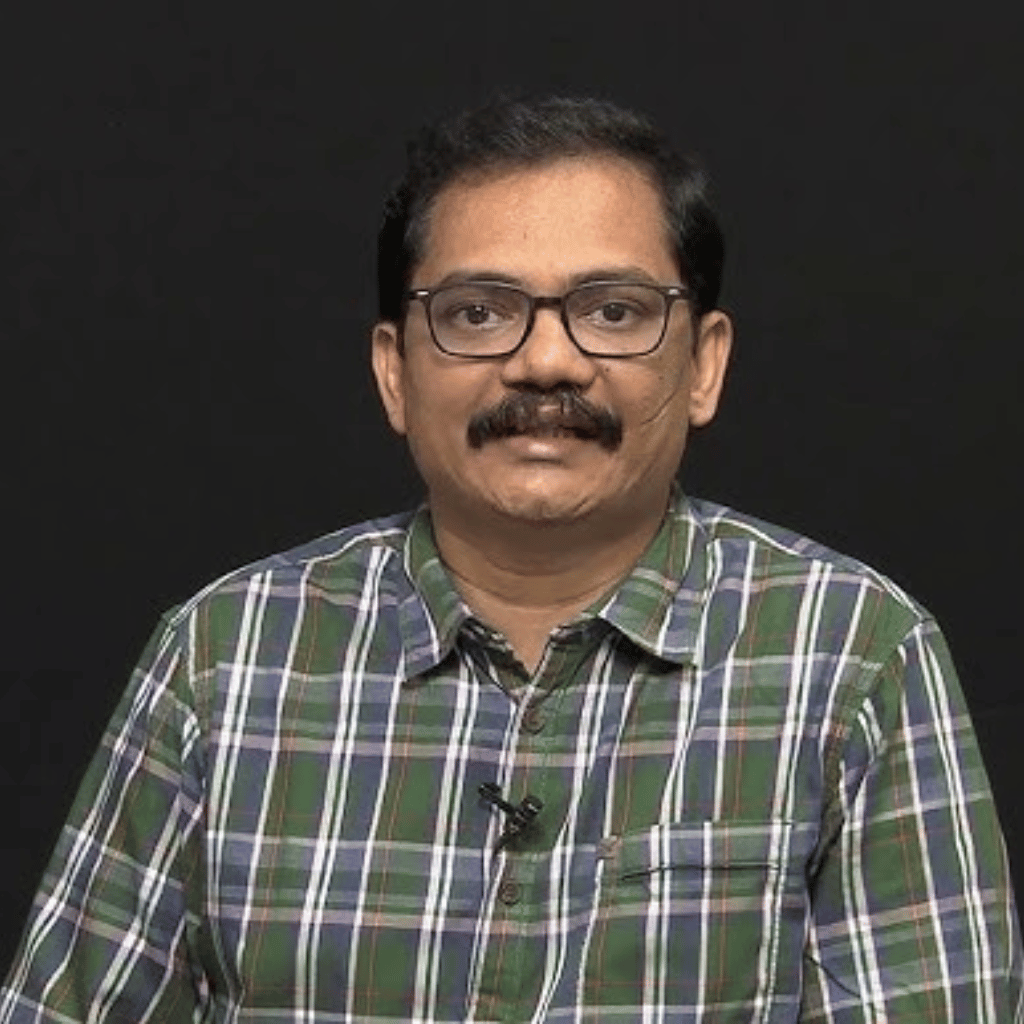
Baskar S
Professor, Mathematics, IIT Bombay
Challenges
“Distributing papers among TAs, tracking who evaluated what, and addressing student cribs used to take considerable time,” recalls Prof. Baskar. “Even for class tests, it was challenging to manage the logistics smoothly when the batch size was large.”Prof. Baskar needed a single, reliable solution that could automate routine assessments, streamline collaborative grading, and simplify student communication, all while maintaining academic integrity and consistency.
Solution
“Since the pandemic, I have been using SAFE exclusively. I’ve forgotten how physical grading feels because everything is digital now. Students actually prefer it. They can see their evaluations quickly, and it avoids the chaos of handling papers manually.”The short class tests, primarily objective in nature, could be created and launched in minutes, with automated & code-based access ensuring that each student received the correct test at the right time. Students attempted them in real time, and results were generated instantly, allowing immediate feedback without faculty intervention. For the quizzes, mid-semester and end-semester exams, which included both objective and subjective questions, SAFE’s grading interface facilitated coordinated evaluation among TAs. Each TA could access their assigned scripts digitally, evaluate responses, and record marks from any location, at any time.
“One of my TAs was in Germany during the evaluation cycle, yet she could participate seamlessly in the grading process,” noted Prof. Baskar. “That flexibility made coordination far simpler and ensured no delays.”One of the most impactful features was the built-in comment feature for crib resolution process. Students could raise requests directly within SAFE, and the faculty/ TA could review, verify, and respond through the same system. This eliminated manual coordination through emails or spreadsheets and brought transparency to the entire review cycle.
“The grading and crib resolution modules were particularly useful,” said Prof. Baskar. “Once everything was on the system, we could ensure fairness, traceability, and faster turnaround without repeated back-and-forth.”
Impact
Quizzes, Mid & End Semester Exams
Crib Resolution Time
Consistent & Transparent Evaluation
“The reliability of the platform is what stood out. Even with high activity during exam weeks, the system ran smoothly and kept everything organized.”
Educators' Reflections
“It became easier to manage both TAs and students,” he reflected. “When the workflow is digital and traceable, everyone becomes more accountable, and that improves the overall academic process.”
Key Takeaway
By integrating auto-graded class tests with structured, collaborative evaluation for longer exams, SAFE provided a unified, scalable solution for continuous assessment in large mathematics courses. It reduced manual coordination by half, ensured transparency in grading and crib handling, and helped maintain consistency across hundreds of students. SAFE emerged as a dependable academic tool that allowed faculty to focus on teaching and conceptual clarity rather than logistical management.
Create your next secure exam with the same
ease as you refresh a tab